
Top 5 common mistakes beginner poker players make (and how to avoid them)
Poker is one of the most popular card games in the world, attracting millions of players thanks to its unique mix of strategy, psychology, and chance. Many beginners are drawn to poker by televised tournaments, online platforms, or friendly games with friends. However, while the rules are relatively easy to learn, mastering poker is much more complex.
Most new players lose not because they are unlucky, but because they make the same fundamental mistakes over and over again. These errors slow down progress, drain bankrolls, and often lead to frustration or quitting the game altogether. The good news is that these mistakes are well known, widely documented, and—most importantly—avoidable.
In this article, we explore the top 5 most common mistakes made by beginner poker players and, more importantly, explain how to avoid them. Whether you play online or live, cash games or tournaments, understanding these errors will help you build stronger foundations, improve faster, and enjoy poker as a smarter and more rewarding experience.
mistake #1
Mistake #1 : Playing too many hands
Why beginners fall into this trap
One of the most frequent mistakes beginners make is playing too many starting hands. New players are often excited to be involved in every pot and believe that any two cards can win. This mindset usually comes from a lack of patience and a misunderstanding of how often strong hands actually appear. Beginners also tend to overvalue hands like weak aces, low suited cards, or disconnected face cards. While these hands can win, they often put players in difficult situations after the flop.Why this is a problem
Playing too many hands leads to several issues:- You end up in marginal situations with weak holdings
- You lose chips slowly but consistently
- You face difficult decisions post-flop
- Stronger players exploit your loose play
How to avoid it
To avoid this mistake:- Learn basic starting hand charts for your game format
- Play tighter from early positions and looser from late positions
- Focus on quality hands, not quantity
- Accept that folding is part of winning poker
mistake #2
Mistake #2 : Ignoring position at the tables
What position means in Poker
Position refers to where you are seated relative to the dealer button. Acting later in a hand gives you more information about your opponents’ actions, which is a major advantage. Many beginners underestimate the power of position and play the same hands regardless of where they are seated.Why position is so important
When you act last:- You see what others do before making a decision
- You can control the size of the pot more effectively
- Bluffing becomes easier and more profitable
- You avoid costly mistakes with marginal hands
How to avoid it
To use position correctly:- Play fewer hands from early position
- Expand your range in late position (cutoff and button)
- Be cautious when calling raises out of position
- Observe how experienced players adjust their strategy based on position
mistake #3
Mistake #3 : Overvaluing hands and refusing to fold
The emotional attachment to cards
Beginners often become emotionally attached to their hands, especially strong-looking ones like top pair or overpairs. Once they hit something on the flop, they feel committed to the pot and ignore warning signs. This attachment leads to the dangerous belief that folding equals weakness.Why this costs money
Poker is a game of relative hand strength. A good hand can easily become second best depending on the board and your opponent’s actions. Refusing to fold leads to:- Losing big pots unnecessarily
- Paying off stronger hands
- Ignoring betting patterns and board texture
How to avoid it
To fix this mistake:- Learn to think in ranges, not single hands
- Pay attention to board texture and opponent behavior
- Ask yourself: “What worse hands would call or raise here?”
- Accept that folding can be the most profitable decision
mistake #4
Mistake #4 : Playing based on emotion instead of logic
Understanding Tilt
Tilt is a state of emotional frustration that leads to poor decisions. It often occurs after bad beats, losing streaks, or personal stress. Beginners are especially vulnerable to tilt because they lack emotional control and experience. When tilted, players chase losses, bluff recklessly, or play hands they would normally fold.Why emotional play is dangerous
Emotional decision-making destroys discipline and strategy. It causes:- Over-aggression without logic
- Poor bankroll management
- Escalating losses
- Loss of focus and awareness
How to avoid it
To manage emotions:- Set session limits for time and money
- Take breaks after big losses or bad beats
- Recognize early signs of tilt
- Stop playing when emotions take over
mistake #5
Mistake #5 : Poor bankroll management
What is bankroll management
Bankroll management means playing stakes that your budget can comfortably support. Many beginners ignore this concept and play games that are too expensive for their bankroll, often chasing fast wins. This mistake is one of the main reasons players go broke quickly.Why it matters
Even good players experience variance. Without proper bankroll management:- A short losing streak can wipe you out
- Stress affects decision-making
- You feel pressure to win every session
How to avoid it
Smart bankroll guidelines include:- Keeping separate poker funds
- Playing cash games with at least 20–30 buy-ins
- Playing tournaments with conservative buy-in levels
- Moving up in stakes gradually, not emotionally
mistake #6
#Bonus Mistake: Not studying the game
Relying only on experience
Many beginners believe they will improve just by playing. While experience is important, poker is a skill-based game that requires study and reflection. Without learning, mistakes are repeated instead of corrected.How to improve faster
To accelerate progress:- Review hands after sessions
- Read poker articles and strategy guides
- Watch educational videos or streams
- Discuss hands with other players
Poker is a game that looks simple on the surface but reveals deep complexity over time.
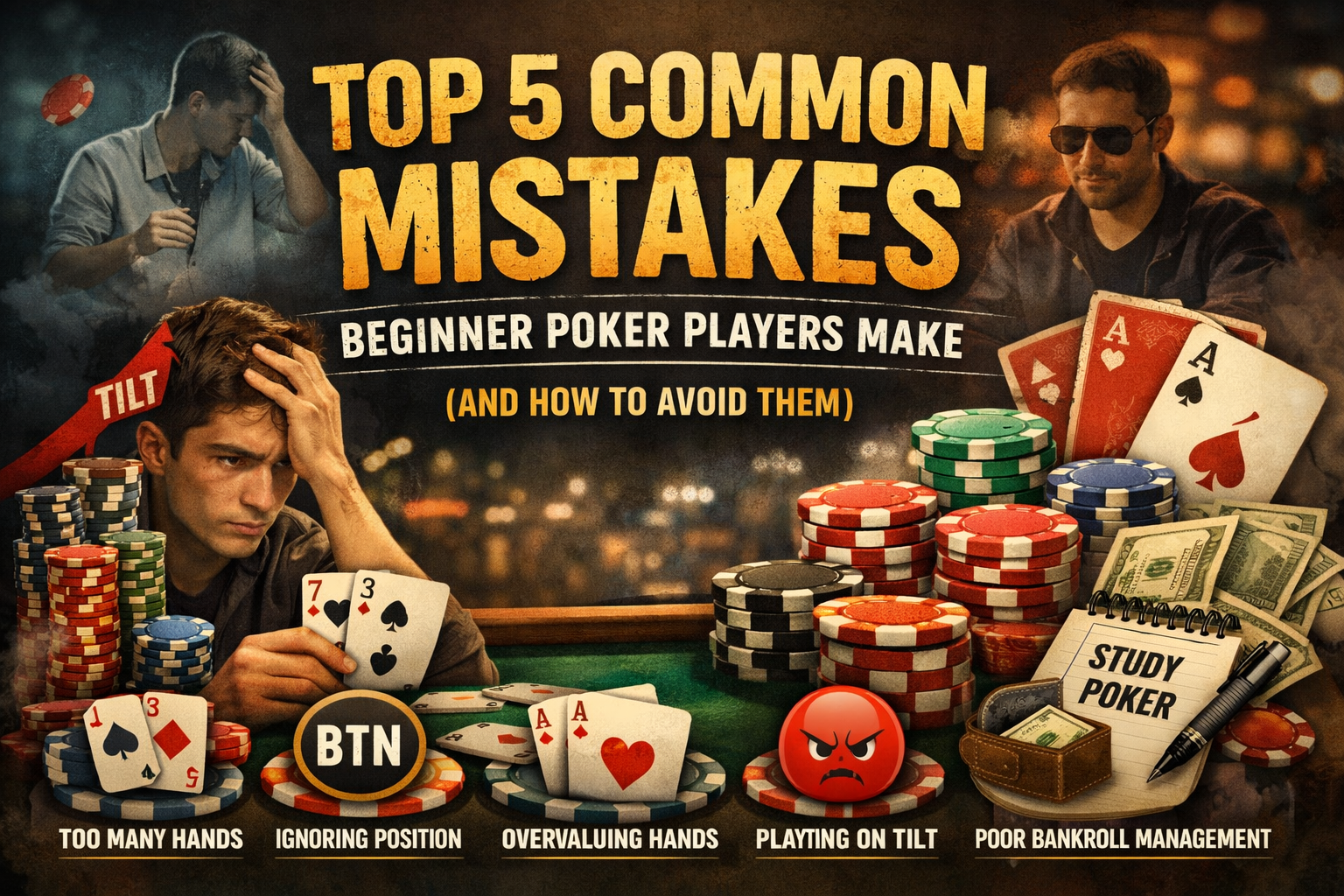
Poker is a game that looks simple on the surface but reveals deep complexity over time. Most beginner players struggle not because they lack intelligence or talent, but because they repeat the same common mistakes. Playing too many hands, ignoring position, refusing to fold, letting emotions take control, and mismanaging bankrolls are all obstacles that slow progress and cause unnecessary losses.
The key to improvement lies in awareness and discipline. By recognizing these mistakes early and actively working to avoid them, beginners can dramatically improve their results and enjoyment of the game. Poker is not about winning every hand—it is about making better decisions over time.
With patience, study, and emotional control, poker becomes not just a game of chance, but a rewarding strategic and social experience that continues to challenge and inspire players around the world.
